The Benefits of Live Plants
Incorporating live plants into a freshwater aquarium goes far beyond aesthetics. Plants act as a secondary filtration system by absorbing nitrates, which are the end product of the nitrogen cycle. They also release oxygen into the water during photosynthesis and compete with algae for nutrients, helping to keep the tank clear. For the fish, dense planting provides natural hiding spaces, reduces stress, and breaks up sightlines to minimize territorial aggression.
For beginners, selecting hardy, low-light plants is highly recommended, as they do not require expensive specialized lighting fixtures, complicated CO2 injection systems, or intricate fertilization routines.
Beginner Plant Directory
Java Fern
An incredibly forgiving epiphyte with broad, textured green leaves. It grows from a thick green stem called a rhizome. The rhizome must never be buried in substrate, or the plant will rot. Instead, tie or glue it to rocks or driftwood. It thrives in low lighting and requires minimal maintenance.
Anubias
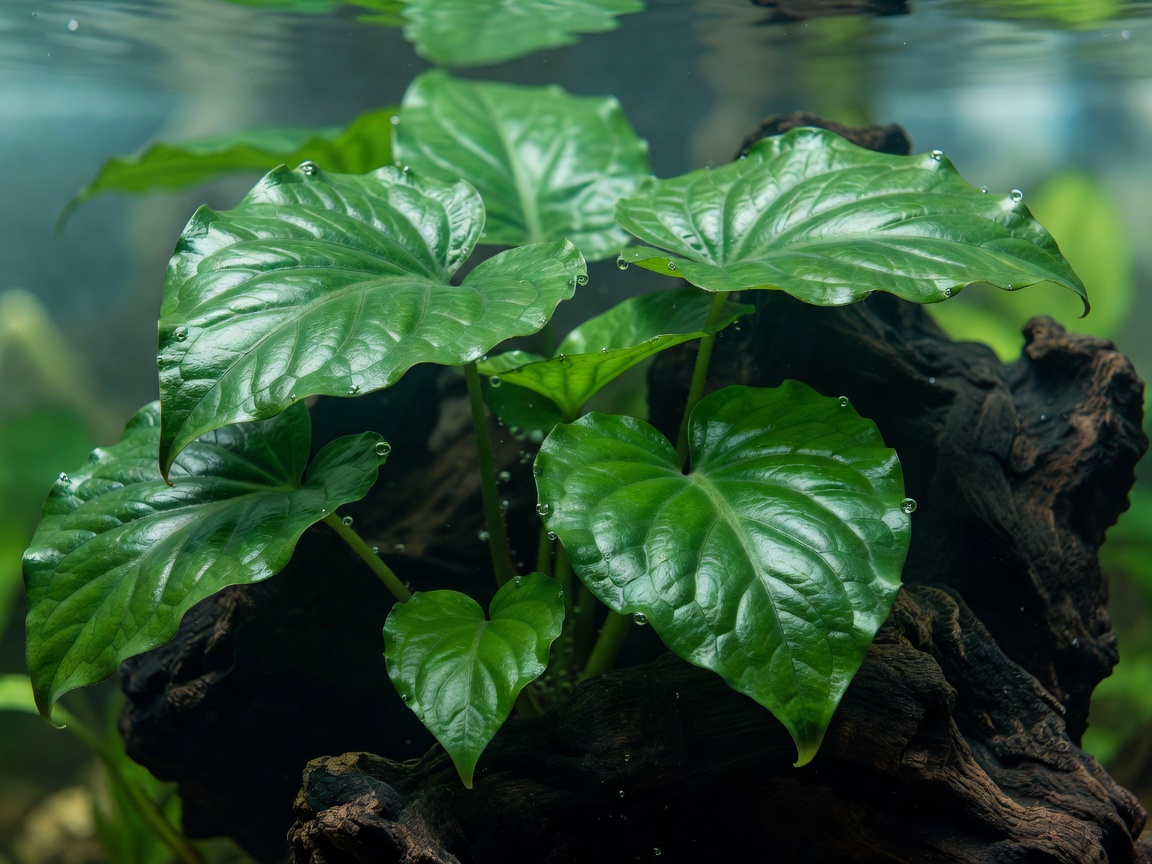
Features dark green, leathery leaves tough enough to withstand nibbling. Like Java Fern, it grows from a rhizome and must be attached to hardscape. It is a slow grower that does well in low to moderate light. Its slow growth means it can attract spot algae if placed under direct, intense light.
Amazon Sword
A classic background plant producing large, broad, light-green leaves. It is a heavy root feeder and must be planted deep into a nutrient-rich substrate. If keeping them in plain sand or gravel, root tab fertilizers are necessary. Best suited for medium to large aquariums.
Java Moss
A dense, stringy moss providing excellent hiding spaces for small fish and fry. It has no true roots and anchors itself to almost any surface. It is highly adaptable, tolerating various water parameters and low lighting, but requires occasional trimming to prevent overgrowth.
Cryptocoryne
Rooted plants offering variations in leaf shape and color, often exhibiting bronze or brown hues. Beginners should be aware of "Crypt melt," where the plant sheds its leaves when introduced to new water conditions. The root system usually survives, and new adapted leaves will eventually grow.